
Proton therapy
What is proton therapy?
Proton therapy, also known as proton beam therapy, is a type of radiation therapy for cancer that uses high-energy protons (positively charged atoms) to damage the DNA in cancer cells and destroy them. This type of cancer treatment is noninvasive, painless, and highly accurate. By targeting the genetics of cancer cells, it destroys them and prevents them from multiplying.
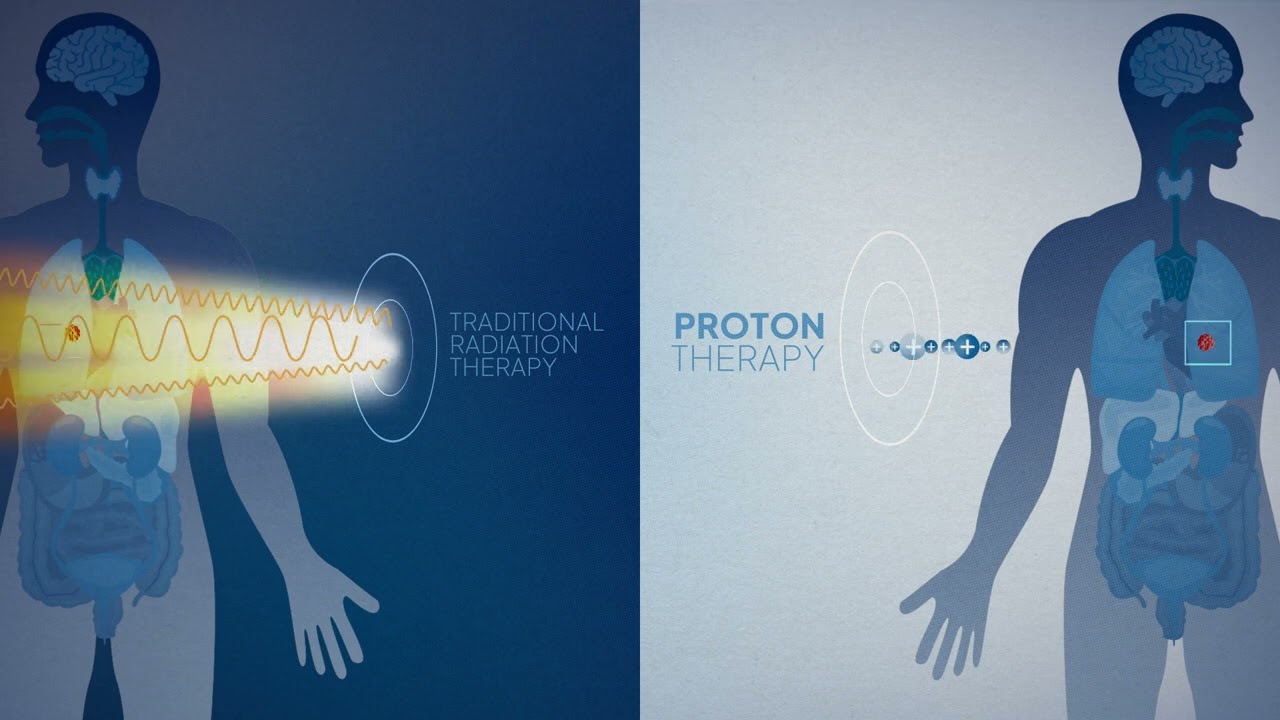
What sets proton therapy apart from other types of radiation therapy is its use of high-energy proton beams instead of x-ray beams to treat cancer. Proton beams are more precise than x-ray beams, which allows for more energy to be used to target cancer cells. Radiation oncologists can also design proton beams that exactly fit the shape and depth of a tumor, customizing the radiation to target a tumor’s unique form.
Because proton beams are tightly controlled, they can target the tissue being treated with pinpoint accuracy. This produces minimum damage to nearby healthy tissue and vital organs. This distinction makes proton therapy a good option for treating cancers that are in or close to critical areas such as the brain or heart. It can also produce fewer side effects than other radiation treatments.
Who is a candidate for proton radiation therapy?
There are multiple types of radiation treatments, including proton therapy, available at Penn Medicine. Our cancer specialists have the expertise to determine which treatment options are right for you based on your unique health needs. They’ll evaluate you for whether proton therapy is the best treatment based on your health history, type of cancer, and effectiveness of treatment.
We consider multiple factors when we evaluate whether proton therapy is the best treatment option for you, including:
- The type and size of cancer
- The cancer’s location and how close it is to other critical organs or tissues
- Other types of cancer treatment that you may need
- Your age and overall health, including other health conditions
Once we’ve considered your health history and cancer diagnosis, our radiation oncologists will decide whether you’re a candidate for proton therapy or another type of radiation therapy. Traditional radiation therapy remains a powerful cancer treatment option for many people. Your doctor will discuss why one radiation treatment is likely to be more effective than another and answer any questions you may have about the best way to proceed.
Proton therapy can be effective in treating cancers that have not spread (are not metastatic) and tumors that are in or near critical areas such as the brain, heart, and lungs. Currently, the types of cancers best treated with proton therapy include:
- Brain cancer
- Spinal tumors
- Breast cancer
- Cervical cancer
- Gastrointestinal (GI) cancers
- Head and neck cancer
- Kidney cancer
- Lung cancer
- Lymphoma
- Mesothelioma
- Pediatric cancers (with Children’s Hospital of Philadelphia)
- Prostate cancer
- Sarcomas
- Throat (oropharyngeal) cancer
Our radiation oncologists are continuously researching new ways to use proton therapy to treat additional cancers and noncancerous (benign) tumors.
How proton radiation treatment works
The proton therapy team at Penn Medicine understands that every patient’s situation is different. We work together with you to create the right proton treatment plan and explain the proton therapy process, start to finish. You’ll have the opportunity to ask questions about every step in your treatment journey—from evaluation to follow-up care.
Learn more about what to expect before, during, and after proton therapy treatment
Support services for your proton radiation treatment
Penn Medicine offers a wide range of cancer support services for people receiving proton therapy treatment and their loved ones. These services provide helpful information and practical advice to help keep you comfortable and supported through your treatment and beyond.
- Hospitality assistance: We provide help with transportation, lodging, counseling, and other services from social workers who specialize in working with people who have cancer.
- Nutritional counseling: You can consult with specialized registered dietitians who design eating plans for ease of swallowing and weight management.
- Support groups with treatment alumni: Our radiation oncology department hosts a Patient Alumni Program in which current and previous patients of proton therapy and other radiation types can meet and talk about shared experiences.
- Integrative oncology: We offer integrative and alternative therapies such as acupuncture, art therapy, massage, meditation, pet therapy, reiki, and yoga that can help improve your health and well-being.
Expert proton radiation therapy at Penn Medicine
When dealing with a cancer diagnosis, it’s reassuring to know that safe, effective proton treatment is within your reach. At Penn Medicine, you’ll have access to some of the world’s foremost experts in proton therapy, a highly precise form of radiation therapy that requires delivery from experienced providers.
Qualities that set us apart include:
- Depth of experience: Our radiation oncology teams have treated more than 10,000 patients with proton therapy. You benefit from the broad and deep experience they’ve gained by treating a high volume of patients.
- Exceptional expertise: Each of our proton therapy team members specializes in treating cancer in a specific area of the body. They’ve seen your type of cancer before and know how to treat it.
- Comprehensive care for children: In partnership with Children’s Hospital of Philadelphia (CHOP), our pediatric radiation oncology team treats children who have various cancers. Your child receives proton treatment from world-class experts in childhood cancers with specialty training in pediatric care through our pediatric proton therapy program.
- Nationally recognized excellence: Penn Medicine has one of a handful of proton therapy centers in the world that is fully integrated with a National Cancer Institute (NCI)-designated comprehensive cancer center. This designation means that our proton therapy team meets the highest standards for the most advanced cancer research. We give you access to the latest therapies, including clinical trials for treatments not available at most other cancer centers.
- Ongoing research to advance treatment: Our radiation specialists continue to conduct research that evaluates the use of proton therapy for cancers of virtually any kind. Our goal is to find more ways to use proton therapy—and make it more effective—for more cancers.
Rated “exceptional” by The National Cancer Institute
Penn Medicine’s Abramson Cancer Center is a world leader in cancer research, patient care, and education. Our status as a national leader in cancer care is reflected in our continuous designation as a Comprehensive Cancer Center by the National Cancer Institute (NCI) since 1973, one of 7 such centers in the United States. The ACC is also a member of the National Comprehensive Cancer Network, one of a select few cancer centers in the U.S., that are working to promote equitable access to high-quality, advanced cancer care.
Cancer care at Penn Medicine
Penn Medicine’s Cancer System, led by the Abramson Cancer Center, brings together the expertise and capabilities of hospitals and outpatient facilities across our wide region to deliver the best cancer care anywhere. With locations at the Hospital of the University of Pennsylvania, Pennsylvania Hospital, Penn Presbyterian Medical Center, Chester County Hospital, and outpatient locations in the Philadelphia and NJ suburbs, you can receive leading care close to home. Beyond the greater Philadelphia region, the system includes programs at both the Ann B. Barshinger Cancer Institute at Lancaster General Health and Princeton Medical Center.
Related specialties
Our doctors
Our providers work with you to plan and deliver exceptional treatment and personalized care.
Locations
Our hospitals, multispecialty medical centers, pharmacies, labs and more offer outstanding, personalized care for patients all across the region.
Patient stories
Living and giving back for gynecologic cancer patients
Dalia Jakas wanted to live in spite of a uterine cancer recurrence in her 80s, but she wouldn’t accept any compromises on the quality of her life. After her proton therapy treatment, Jakas is now giving back by funding research to help other patients. “I am eternally grateful to Dr. Taunk and his competent team for saving my life,” she said.
Real-time tumor assessment brings relief
“Hearing my results right away and walking away from an appointment with a game plan lets me enjoy my life between scans,” said Lynn Oxenberg.
Proton therapy for skin cancer: Chuck's story
Penn Medicine cured my cancer, and I’m living a wonderful, healthy life, appreciating every day I have with my family.
Before launching a new CNN show, journalist Kasie Hunt had a brain tumor removed
“There’s nowhere in the world I would rather have this done than at Penn.”
Advanced cancer care, closer to home
For Brian Rump, getting CAR T cell therapy nearer to home at the Ann B. Barshinger Cancer Institute in Lancaster was a game-changer. “I’m in it to win it with my cancer treatment and I know my care team at ABBCI will be with me every step of the way.”
How discoveries become cures, in a virtuous cycle
Public investments in biomedical research have an outsized effect, driving new scientific insights, economic growth, and ultimately treatments and cures.
How future cures begin as ideas in laboratories
The successes of CAR T research show the importance of the cycle of science—sparking new ideas and clinical trials that give patients better options.
A woman's unique path to a lung cancer diagnosis
I was completely shocked. I had no symptoms, I never smoked or spent time around smokers, and there is no history of lung cancer in my family.
Rediscovering joy after treatment for a pituitary condition
I felt like a completely different person… that referral saved me.
An unexpected diagnosis and a surreal surgery
“No one ever wants to go through this, but having this support system in place for my own journey has helped me to feel like I’m in the best hands at every turn.”