
Cancer care for the mind and spirit
A program where cancer patients can get free mental health care addresses an underrecognized need: that cancer’s deepest wounds are often not physical.
Breast cancer unsteadied Pam Fisher.
The mass was found early, it was highly treatable, and the pharmaceutical executive was determined to get through cancer the same way she tackled any other challenge: Identify the problem, resolve it, move on.
But when Fisher returned to work in the summer of 2024 after a medical leave of absence, she felt like she had been pushed off an emotional cliff. She doesn’t know if it was an existential crisis or the sudden loss of estrogen from the medication shutting down her ovaries, but she felt adrift, overwhelmed, and unsettled—awash in negative thoughts.
Her oncologist, Ramy Sedhom, MD, medical director of Oncology and Palliative Care at Penn Medicine Princeton Health, said something that brought tears to her eyes:
“How are you doing?”
“It was so powerful for him to ask that question,” Fisher said. “He was the only person who knew what I had been through.”
Sedhom told her about a new Psychosocial Oncology Clinic—a team of specially trained psychotherapists, available at no charge in the most convenient setting for patients. The oncologist recommended Fisher talk with Kara Buda, PhD, a psychologist on the same floor.
Fisher told him she didn’t need that. In the environment and culture in which she was raised, “you don’t go see a doctor for your mind. You put your head down and figure it out, and work through it.”
The second or third time she had uncontrollable tears in Sedhom’s office, she remembers him taking a more direct approach: “I’m going to get Dr. Buda. Just talk to her.”
A new approach to cancer care
The psychosocial oncology program—funded by a $2.6 million gift, co-led by Sedhom and psychologist Rebecca Boswell, PhD, and already serving as a model for other sites—is a part of a revolution in cancer care at Penn Medicine to address a wider range of cancer patients’ experiences.
At Princeton Health, the new programs are growing against the backdrop of an overall expansion of cancer care services, with the new Penn Medicine Princeton Cancer Center planned to open in 2028.
Sedhom had been inspired in his oncology training by the work of Tom J. Smith, MD, one of the first oncologists to pursue a career in palliative care. When Sedhom joined Penn Medicine Princeton Health in 2021, it was as both a medical oncologist and a palliative care specialist—providing patients with personalized cancer treatment while also offering support and symptom management. Hospitals always have palliative care, but it’s rare to have it in outpatient settings.
Since then, Sedhom has worked to grow programs to transform the cancer patient experience through “whole person” cancer care.
In 2023, he received a $2.5 million grant from the Bristol Myers Squibb Foundation to create Penn Medicine’s first geriatric oncology program in response to what he was seeing in Princeton, N.J. He viewed cancer care for patients aged 65 and older as a health equity problem, as they had hidden vulnerabilities that often went unappreciated.
“A lot of the challenge with older adults is not about the best treatment of this cancer, but how you align treating the cancer with the patient’s goals, different family dynamics, and multiple medical comorbidities,” Sedhom said. It’s a population that rarely is accepted for enrollment in clinical trials, so providers are often left to guess at the best thing to do for them.
The grant allowed the department to hire a palliative care doctor focused on patients with cancer, along with a geriatric social worker, geriatric nurse navigator, and program manager, as well as to create a population health dashboard with comprehensive assessments to better understand the patients.
Geriatric oncology clinics have since opened at the Ann B. Barshinger Cancer Institute (ABBCI) at Penn Medicine Lancaster General Health and Pennsylvania Hospital. Sedhom and ABBCI Executive Medical Director Efrat Dotan, MD, are also leading the Penn Center for Cancer Care Innovation’s new Center for Cancer & Aging, a research hub to address the needs of aging populations with cancer.
The mental element
The geriatric oncology patient dashboard surfaced a surprise to Sedhom: Most reported some level of distress.
Sedhom acknowledged his personal bias in believing that cancer was more upsetting for younger patients. He hadn’t thought about how “when you’re 80 with cancer, you worry about a lot of things—not just what’s going to happen to you physically but, are you going to be a burden to others, and how your spouse of 50 or 60 years is going to deal with you not being around for the first time.”
The findings proved that the distress, loneliness, and fear brought by cancer are universal—from the moment of diagnosis.
Meanwhile, Boswell—the hospital’s administrative director of psychiatric services—had been developing a generation of clinicians with expertise in health psychology interventions, including in the context of medical conditions.
In 2022, she founded Princeton Medical Center’s psychology training program, a new clinical model and training program supporting the integration of behavioral health across medical settings—now in oncology, sleep, gastroenterology, eating disorders, and women’s health.
Integrated behavioral health interventions—where psychologists and therapists treat mental health concerns as part of the care team—make sense for multiple reasons, Boswell said.
Mental health support is proven to improve not only psychological symptoms, but also medical outcomes. For cancer patients specifically, research shows that those who seek and receive mental health support have an improved quality of life during care, as well as fewer hospitalizations, better outcomes, and a higher likelihood of successfully completing their treatment, Boswell said.
Yet it’s well known that access to mental health care is almost a privilege—hard to find and often not reimbursed by insurance companies.
And cancer patients face specific challenges. In cases where patients can find a therapist, the provider is unlikely to have cancer-specific training. Moreover, the whole process of looking for a psychosocial oncology specialist when a patient is already undergoing significant treatment “adds an additional time burden to what can already be a very time-intensive disease,” said Boswell.
Patients are 10 times more likely to engage in mental health services when they are integrated in a medical clinic. That in turn, she said, results in direct benefits for care teams and hospital systems: fewer emergency room visits, more physician time, less staff burnout, and increased adherence to recommended treatments. The programs more than pay for themselves, especially when run well.
Making a service that’s specialized, free, and in-house maximizes the value for everyone.
A meaningful gift
In 2023, the Princeton Medical Center Foundation approached a longtime donor to discuss the plans for a new cancer center.
“He said basically, ‘I’m glad you’re building a cancer center. Are there plans to incorporate a mental health piece?’” said Hyona Revere, vice president for Development at Penn Medicine Princeton Health, recalling the meeting.
The donor had lost his mother to ovarian cancer and saw the emotional toll her illness took on his father and other family members. He and his family understood the intersection of mental health access challenges and the world of cancer, both personally and as community members, for both patients and caregivers.
Sedhom and Boswell laid out their vision for the Psychosocial Oncology Clinic and a plan for implementation. Abramson Cancer Center Director Robert H. Vonderheide, MD, DPhil, and Deputy Director of Clinical Services David W. Dougherty, MD, MBA, emphasized to the donor that whole-person cancer care was a systemwide priority, and Princeton Health was leading a movement that would spread throughout Penn Medicine.
The donor pledged a $2.6 million gift.
“It was a beautiful melding of the resources and initial thought and passion of a donor, and two clinicians who had the talent and vision to put together something meaningful,” Revere said.
A balm for a ‘human crisis’
The Princeton Health program stands out in a landscape where health systems are facing what was described as a “human crisis of cancer care” by a Lancet Oncology commission in November 2025. As precision medicine and other therapies have transformed survival outcomes, the commission wrote, cancer care has largely shifted away “from the everyday realities and needs of those affected.”
Framed another way, “it’s a natural extension of our incredible progress, that we are broadening our vision of what we’re responsible to achieve,” Vonderheide said.
Sedhom has become a leading voice on this issue. In a 2025 commentary for Oncology News Central, he called on cancer centers to provide integrated support services, outlining how they can improve patient outcomes, reduce clinician burnout, and reshape the culture of cancer care.
Cancer care, he wrote, must no longer be seen as an interaction between patients and physicians.
“The reality is that the best care comes from an ensemble: therapists who create safe spaces, social workers who navigate resources, nurses who notice subtle changes in mood, physicians who listen differently, and administrators who carve out time and space for these services,” he wrote.
The clinic
The clinic has five psychologists and licensed clinical social workers. In addition to providing clinical services, the team is conducting clinical research investigating the best ways to deliver care (asynchronous visits vs. aligned to when patients see their doctor, in-person vs. telehealth, etc.) and adaptations of evidence-based psychological treatments to the oncology setting.
Oncologists at Princeton Health share the same clinical space as the therapists, making it easy to access timely help for a patient in need. In this way, oncologists can focus on the patient’s medical treatment, and “one provider isn’t burdened with all of the different needs of a patient at the same moment,” Boswell said.
The team doesn’t wait for patients to ask for help.
If a patient is in clear distress, like Fisher was, “I can send a message to the psychology staff pool and say, ‘I’m in Room 4 with a patient who I think would benefit from your services, who’s available?’” Sedhom said. Whichever therapist has that time blocked off for what they call a “warm handoff” can come and introduce themselves to the patient.
In many cases, patients don’t bring up worries, insomnia, or existential crises in an oncology appointment; they know their visit is short, and they often want to talk about their treatments and test results. They may also worry that bringing up distress could derail their medical treatment.
Surveys and questionnaires given to every patient are more likely to surface problems that they wouldn’t bring up to their clinicians. The team is always reviewing the data for reports of distress, in which case a therapist will contact the patient for permission to join their next appointment.
Addressing the emotional side of cancer
Cancer patients and their loved ones face some common challenges that therapists in the psychosocial clinic are trained to address.
Whether curable or incurable, and regardless of the patient’s age, the diagnosis often prompts anxiety, depression, or worries about the future, Sedhom said. Patients learn to cope with feelings—like anxiety, uncertainty, and grief—and with physical symptoms associated with cancer care, including pain, fatigue, and insomnia.
A younger patient might fear how their young children will react seeing them without hair; an older patient could be worried about becoming a burden on their adult children as their illness progresses. The loss of function due to cancer surgery is a common reason for depression, as is the guilt over leaving a longtime spouse if the cancer might be terminal.
“When patients confront cancer, the greatest wounds are not always physical,” Sedhom said. “The illness can unravel identity, stir existential questions, and disrupt the inner compass that once guided daily life.”
Most patients in the psychosocial clinic see a therapist for six to eight sessions. Care is tailored to the patient. Some patients establish separate sessions, in a traditional therapy encounter, but a therapist may also join a patient’s oncology appointment or sit with a patient during a chemotherapy infusion—to maximize support while the patient is already receiving care.
Uniquely, the therapy is also offered to caregivers, as they “are a central part of a patient’s care team and often entirely unsupported,” Boswell said. Caregivers comprised 13 percent of psychosocial patients in the first year.
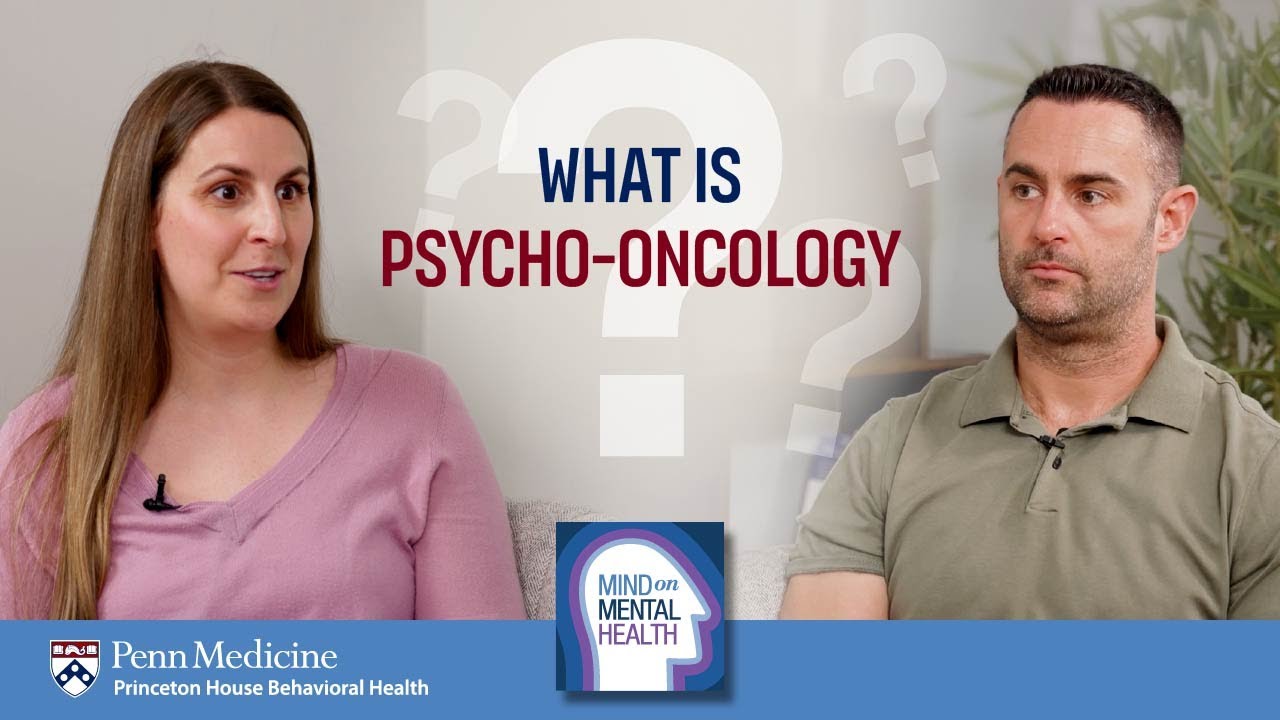
Therapists use a mix of evidence-based psychological treatments like cognitive behavioral therapy, acceptance and commitment therapy, motivational interviewing, and meaning-centered psychotherapy, a therapeutic approach developed at Memorial Sloan-Kettering Cancer Center for patients with advanced cancer. All the clinicians have completed trainings at Memorial Sloan-Kettering.
Specialized training means the therapists understand the nuances about cancer patients’ courses of medical treatment, and patients aren’t burdened with the need to explain things again and again.
“We talk about precision oncology, meaning, to get the right drug to the right patient at the right time. This is trying to get the right support to the right patient and the right way,” Sedhom said.
Early data showed that 80 percent of patients with clinically significant depression and 100 percent of patients with clinically significant anxiety reported normal or no symptoms when they left the psychosocial oncology service after six to eight sessions. The results were so strong that the team was selected to present them at the 2026 American Psychosocial Oncology Society meeting.
Qualitatively, Boswell can see the impact by looking at the oncologists’ faces.
“After they see a patient, they’ll come and let us know, ‘Wow, this patient is in a different place than they were,’” Boswell said. “You can see the providers feel more relaxed knowing that their patient has this extra type of care, regardless of what the course of their illness looks like.”
Those moments are reminders that addressing distress is not a “nice to have” service, Sedhom said, but part of good cancer care.
Meeting Dr. Buda
Pam Fisher’s career and family were her top priorities when a mammogram in late 2023 found the mass. She had worked her way to vice president at a global biopharmaceutical company, reporting to the CEO. Most days were spent in meetings, traveling for work, and remaining composed under the pressure of managing the organization’s diversity and inclusion strategy.
Her identity was rooted in strength, resilience, and control.
Fisher’s care team reassured her that her cancer was highly treatable—stage 1, hormone-receptor-positive, invasive ductal carcinoma—and Fisher focused on getting through the treatment plan. But after her treatment, she felt stressed, unstable, and unable to find explanations for the feelings she was struggling with. Why did she get breast cancer? What if it comes back? Negative thoughts overcame her, and she felt guilty for not managing her illness as well as she thought she should.
“Cancer didn’t just attack the body. It really unsteadied me,” Fisher said. “It was the first time in my life that I didn’t have the answers or couldn’t find the answers by reading or researching.”
Fisher said that when she first met psychologist Kara Buda, PhD, in Sedhom’s office, “she was so compassionate and caring and engaged and thoughtful, and I felt like in the first few minutes, she understood exactly where I was in my journey.”
Expansion
Boswell is working with Marguerite Pedley, PhD, senior vice president of Princeton House Behavioral Health, on implementing an integrated behavioral health care delivery model that sustains and grows the service beyond the life of the philanthropic gift that launched the psychosocial oncology clinic—both in Princeton and to cancer programs across Penn Medicine.
Vonderheide said he has long recognized the importance of treating patients’ needs beyond making their cancer go away, but the leaders at Princeton Health were the ones to prioritize the services, set forth the vision, and show how they can be implemented.
“We’re using it as a model to learn how to do this across Penn Medicine, because it’s important everywhere,” he said. “What good is it if we treat a patient and cure them of breast cancer, only to have them emerge with a cancer-induced depression?”
The program is expected to expand to additional sites in 2026. Princeton Health will serve as the central pillar for mental health and cancer—providing scheduling and telehealth support—with each site providing one or two clinicians for in-person visits.
“We envision that in a perfect world,” Sedhom said, “in the next five years, this will exist everywhere across Penn.”
‘Standard of care’
Through eight sessions over a few months, Fisher learned to explore and reframe her distressing thoughts and identify what mattered most.
“Getting diagnosed with cancer is a life-changing event for so many people, in that it significantly shakes up how we think about ourselves, others, the world … That’s not necessarily a sign that we’re weak, or we’re not doing enough, or that this is our fault,” Buda said. “Maybe, it’s a sign that it could help to look at things differently.”
Over time, Fisher gained greater clarity about “what truly supports a purpose-driven life,” and she recognized that her “old normal” no longer aligned with her values or well-being. Embracing a “new normal,” she relocated to be closer to family and friends and has shifted her career emphasis to work advancing health equity.
She firmly believes that integrated mental health support “should be a standard component of comprehensive cancer care for all patients.”
It was "the ease, convenience, and the in-the-moment response of Dr. Sedhom being able to go next door to get Dr. Buda and not have to refer me,” Fisher said. Otherwise, “I probably would not have taken the steps to properly heal from this life-changing experience."