
Lancaster leader elevates cancer care for older adults
As the new leader for the Ann B. Barshinger Cancer Institute, Efrat Dotan, MD, MTR aims to bring the newest innovations to Lancaster’s older patients.
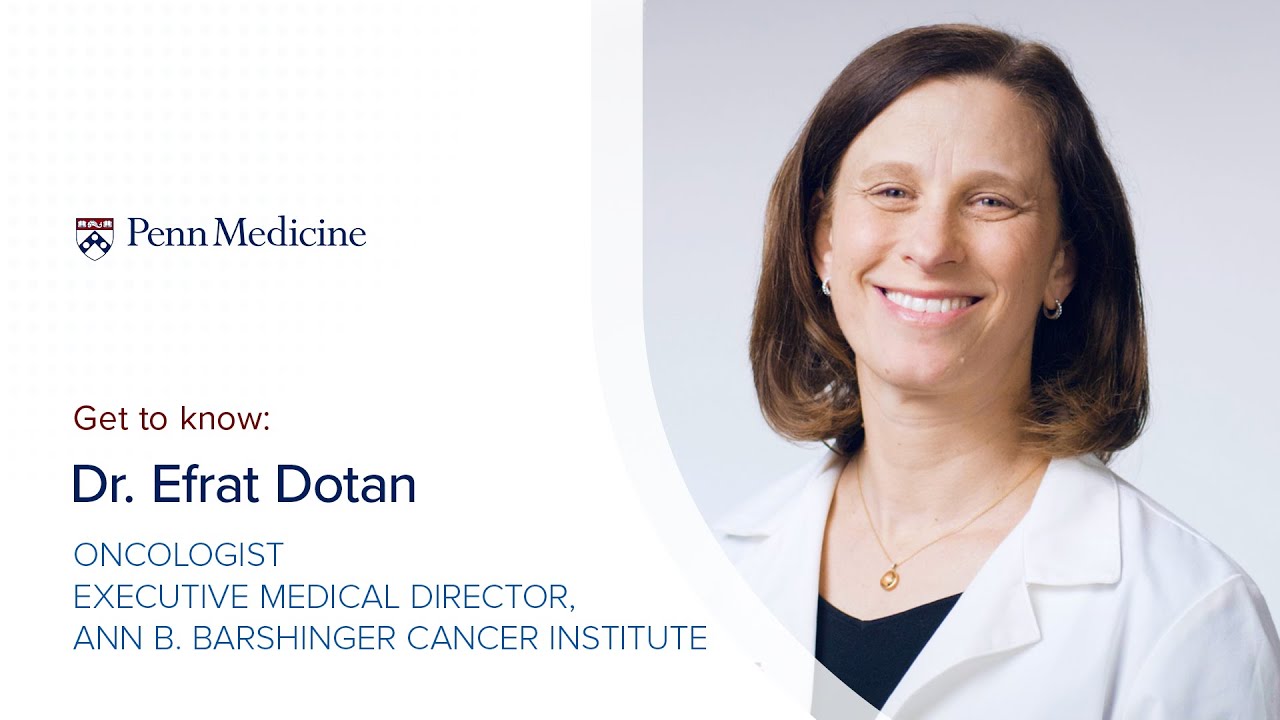
Efrat Dotan, MD, MTR starts her day with a mantra: Provide the best cancer care to Lancaster County. Her mornings, before seeing patients and attending executive meetings, are a time to focus on the evolving needs of patients and building a seamless bridge between community-based care and academic medicine.
It's been about a year since she stepped in as the executive medical director of The Ann B. Barshinger Cancer Institute (ABBCI) at Penn Medicine Lancaster General Health, and she said she feels like she has been totally integrated into the tight community of Lancaster. She calls working at ABBCI a privilege.
“I am amazed by the care patients receive, from the time you walk through the door and are greeted by one of our volunteers, to the holistic treatment options to support radiation, proton therapy, or CAR T, the team goes above and beyond,” Dotan said.
She is impressed by the level of support for patients beyond traditional cancer treatment. It’s an effort and attention to detail that inspires and informs her new role. Dotan’s charge is to elevate the institute to new heights, while drawing on her experience as a leading cancer doctor.
Bringing clinical trials to the community setting
Dotan has spent much of her career in the world of academic medicine and clinical trial research. She led a research program in gastrointestinal (GI) oncology and geriatric oncology at Fox Chase Cancer Center in Philadelphia before coming to Penn, and she will continue her specialty work in Lancaster treating patients with GI malignancies and building a new geriatric oncology clinic.
Dotan says patients in smaller communities are interested in being a part of academic clinical trials for new cancer therapies, but those trials can be difficult to access outside of big research hospitals. Her vision is that ABBCI—through its connection with the Abramson Cancer Center—will become a regional hub for clinical trials based in the community where patients are already receiving their care.
The emphasis on clinical research also has implications for growing the knowledge base in Dotan’s own specialty of geriatric oncology, or cancer care for older adults. Statistics from 2019-2023 show a 33 percent increase in people aged 60 to 84 years in Lancaster County, and a 17 percent jump among those 85 and older. Those growth rates far surpass state and national averages.
Most studies of cancer therapy come from much younger patients, so this can create uncertainty when managing treatment for older individuals.
“Older patients have different needs when battling cancer since age affects our ability to handle surgery and cancer-fighting therapies,” Dotan said. “Older adults with cancer can benefit from increased support and specific recommendations by geriatric oncologists and geriatricians to ensure they are receiving the care that aligns with their goals and wishes.”
Geriatric cancer care expands across Penn Medicine
This combination of an aging population and Dotan’s expertise sparked the idea for a Geriatric Oncology Clinic at ABBCI, focusing on challenges that older adults face when they are diagnosed with cancer. It opened in August 2025, led by Dotan alongside Simone Fernandes Dos Santos Hughes, MD, a Lancaster General Health geriatrician. The clinic will help physicians personalize therapy to each older adult, understanding the need for different chemotherapy dosing due to age or if surgery is the right option. It will also offer more tailored support before anti-cancer therapies to optimize the tolerance and outcomes of anti-cancer therapies.
The Lancaster center is modeled on a center at Penn Medicine Princeton Health created by Ramy Sedhom, MD, co-leader of Geriatric Oncology for Penn’s cancer service line. Dotan and Sedhom will also lead a new Center for Cancer and Aging, under the Penn Center for Cancer Care Innovation, which will bring together researchers interested in the intersection of cancer and aging through basic lab research, clinical trials, and behavioral and operational research.
Geriatrics isn’t the only area of growth that Dotan sees in ABBCI’s future. She says there are three pillars guiding her approach to leading the institute: clinical care, research, and education.
Imagining cancer care for Lancaster County years in the future
Cancer care is constantly evolving to treat an adaptable disease and help patients who need individualized support. As cancer treatment becomes more complex, LG Health oncologists will become more disease focused—meaning they will have their own area of focus like GI, lung, or urinary cancers. This process has already started within ABBCI and will continue to grow with the introduction of more novel and complex treatments.
Dotan is excited about increasing patients’ ability to access more clinical trials and more novel therapies, which is the second pillar.
And for the education pillar: Dotan is hoping to develop a fellowship program in Lancaster for the next generation of oncologists who can learn about caring for patients in the community setting.
“It’s very different than treating patients in academic centers,” she said.
Although Dotan’s mindset is constant improvement, she says it’s important to routinely look back and appreciate how far ABBCI has come. “Everyone should be very proud of this cancer center and what we already have—now let’s just keep going.”