
Patients having colon or rectal surgery may have a longer recovery time, both in the hospital and at home.
Your surgeon uses a care plan called Enhanced Recovery After Surgery (ERAS), which has been studied in many hospitals. The steps in this plan are designed to help you stay as healthy as possible before your surgery, and to improve outcomes and help you heal faster. They also address your pain, help you manage fluids, and manage the return of your bowel function.
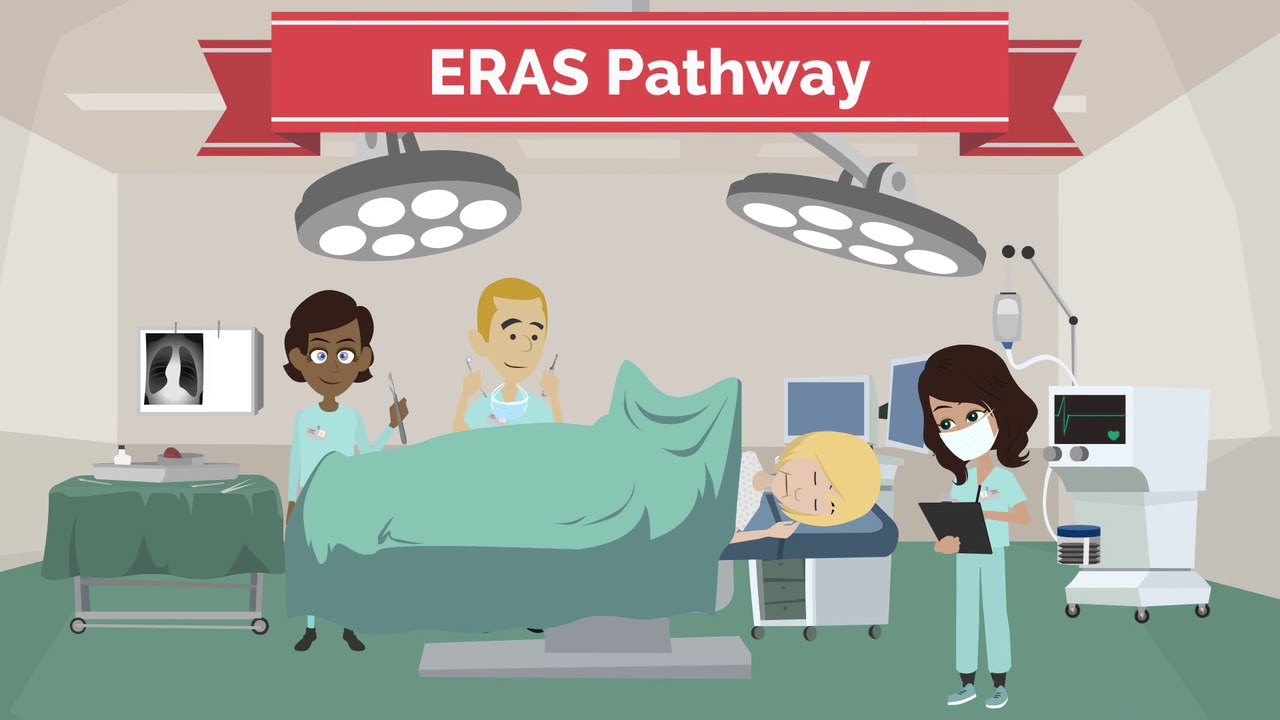
Understanding enhanced recovery after colorectal surgery
Learn what to expect before and after your surgery.
Before arriving at the hospital, you will:
- “Prep” (clean out) your bowels
- Decrease the amount of time that you go without eating
- Learn about your procedure
During surgery, you will:
- Have a minimally invasive procedure, whenever possible
- Have different types of medications controlling your pain
- Be hydrated through intravenous fluids
After surgery, you will:
- Get out of bed and walk as soon as safely possible (“walk early and often”)
- Eat as soon as safely possible
- Avoid excessive intravenous fluid
- Have your pain controlled through different types of oral medications (in addition to narcotics)
- Discuss what caregiving support you may need at home
- Review and meet the key milestones your care team requires before sending you home (e.g. return of bowel function as gas and/or stool, eating and drinking without difficulty or nausea, absence of other medical concerns, etc.)
Colorectal surgery resources
Other resources:
- American Cancer Society: Colon and rectal cancer information
- Crohn's & Colitis Foundation: Crohn's and ulcerative colitis information
- Hollister: Ostomy resources
- Meet an Ostomate: Connect with a patient who has an ostomy
- OUAA: Rights of patients with ostomies
- Free mindfulness meditation app to reduce stress