
What is aspirin-exacerbated respiratory disease (AERD)?
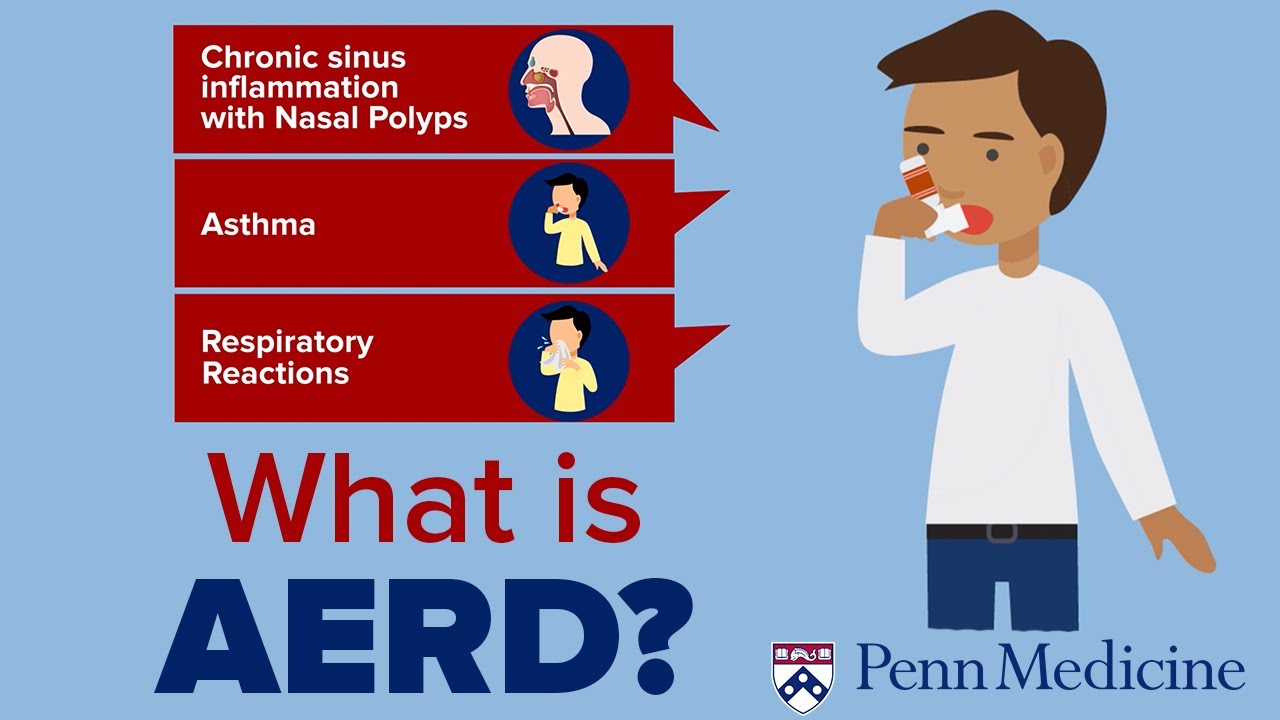
Aspirin-exacerbated respiratory disease (AERD), also known as Samter’s triad, is a chronic inflammatory disorder of the sinuses and lungs that is characterized by a combination of asthma, chronic sinusitis with nasal polyps, and a sensitivity to aspirin or other NSAID drugs. AERD is an acquired condition that is typically developed in adulthood. Patients may suddenly experience the symptoms listed above, with or without taking NSAIDs.
Symptoms of AERD
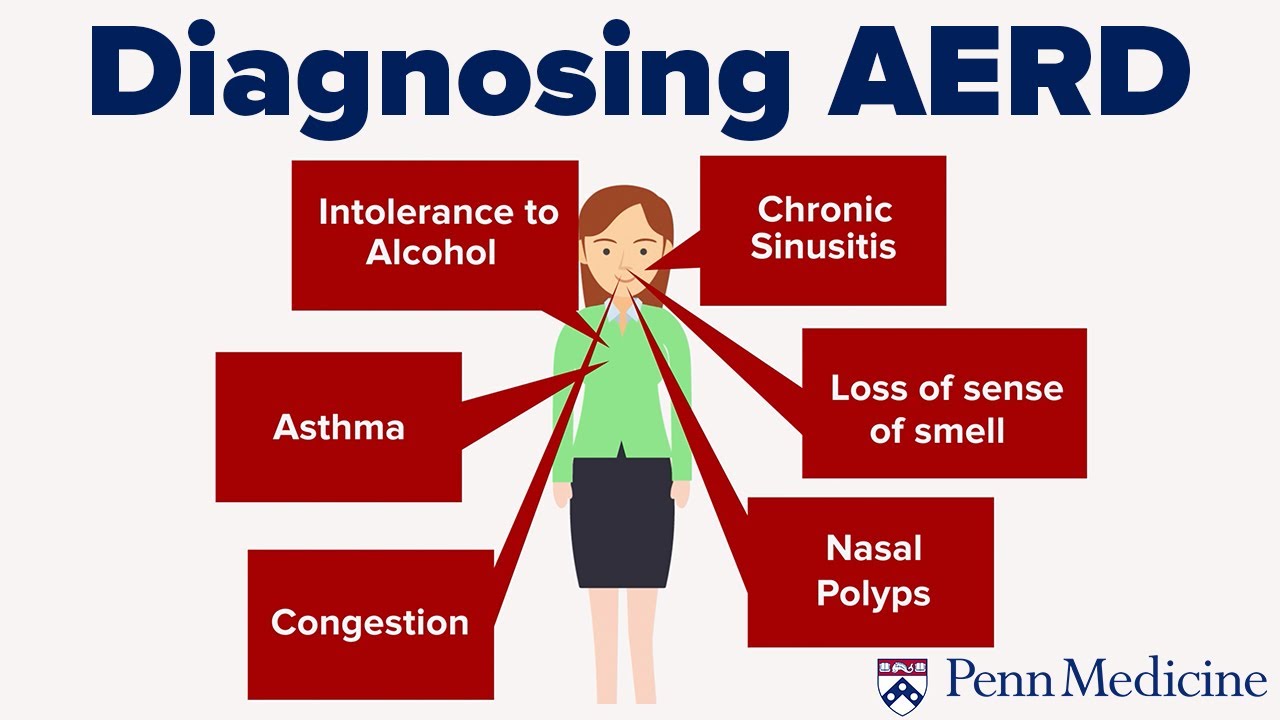
People with no prior conditions may suddenly experience a host of AERD symptoms, including:
- Asthma
- Chronic sinusitis
- Nasal polyps
- Nasal congestion
- Loss of sense of smell
- Intolerance to alcohol
- Respiratory reactions to aspirin and other non-steroidal anti-inflammatory drugs (NSAIDs), cause allergic reactions
Allergic symptoms to NSAIDs may include:
- Asthma attack
- Nasal congestion
- Runny nose
- Watery eyes
- Flushing of the head and neck
- Coughing
- Wheezing
- Shortness of breath
- Chest tightness
Less commonly, there can also be an accompanying itchy skin rash (hives) present or even stomach pain or nausea.
Since asthma is a prominent component of AERD and there are varying severities of asthma, AERD can be life-threatening when triggered by NSAIDs, respiratory infections, or other factors.
What causes AERD?
The exact causes of AERD and triggers associated with the condition aren’t fully understood, though research is ongoing.
AERD appears to be an inflammatory condition that results in an abnormal activation of mast cells, as well as specialized white blood cells called eosinophils, which infiltrate the sinuses and lungs. This leads to an overproduction of, or sensitivity to, substances that cause inflammation.
These substances create a very complex web of interactions, and ultimately a very aggressive sinus and bronchial condition takes hold.
When a patient with AERD takes NSAIDs, a more dramatic surge in the release of inflammatory substances takes place. This is what causes the many symptoms we associate with AERD.
How AERD is diagnosed
Approximately 10% of adults with asthma and 40% of patients with both asthma and nasal polyps have AERD, although they may not be readily diagnosed. Unfortunately, fragmentation of medical care and lack of AERD awareness by many physicians may result in a delay of AERD diagnosis.
With decades of specialized experience at the Penn AERD Center, diagnosing AERD in patients who present with asthma, nasal polyps, and a clear-cut history of respiratory reactions to NSAIDs, is often fairly straightforward.
In cases where the patient’s history is vague or the patient doesn’t take NSAIDs, a supervised oral, graded challenge may be necessary to clinch the diagnosis. The patient is provided a low dose of aspirin under close supervision by an AERD expert in a properly equipped facility. Then the dosage is safely and gradually increased over five to six hours until mild symptoms occur.
Patients with AERD will react with nasal, respiratory, or other allergic symptoms which are promptly and completely treated. Patients who do not react at all do not have AERD.
Once diagnosed, Penn Medicine AERD experts can begin effective treatment.
AERD treatment at Penn Medicine
At the Penn AERD Center, our approach to AERD treatment follows a “surgery-to-desensitization” plan. When surgery is necessary in a patient with nasal polyps, our sinus surgeons focus on a total “clearing” of the sinus cavities with endoscopic sinus surgery. This thorough approach creates the best possible environment for your follow-up care. After you have healed from surgery, we move into the desensitization phase, using aspirin desensitization therapy. This process involves “retraining” your body to handle aspirin safely under our watch. Once you can tolerate it, you’ll start a daily aspirin routine that acts as a powerful shield, helping to stop polyps from growing back and reducing your reliance on oral steroids.
For patients who need extra support, we offer cutting-edge biologic medications and access to the latest AERD research. Once your initial therapy is complete, we continue to meet with you to monitor your progress. Our goal is to ensure you enjoy long-term benefits like better sleep, a restored sense of taste and smell, and a generally lower need for daily medication.