
What is MR-guided focused ultrasound?
MR-guided focused ultrasound (MRgFUS), also called high-intensity focused ultrasound, is a treatment that doesn’t require incisions or surgery. This therapy uses highly focused sound waves to treat essential tremor and symptoms of Parkinson’s disease, like tremor, stiffness, and slow movement.
Penn Medicine was among the first health systems in the world to offer MRgFUS as a noninvasive treatment for essential tremor. Today, our team continues to advance movement disorders care with access to this therapy. We’re the only hospital in Pennsylvania, and one of the few in the Northeast, to offer this treatment.
How does focused ultrasound therapy work?
MR-guided focused ultrasound combines two imaging technologies to help treat movement disorders and associated symptoms. Magnetic resonance (MR) technology provides doctors with precise images to locate the affected area. Then highly focused sound waves destroy (ablate) a precise area of brain tissue. The MR technology also measures the precise temperature of brain tissue during the treatment, increasing the safety of the procedure.
MRgFUS can target an area in the thalamus, a region of the brain involved in many body functions, including control of movement. MRgFUS can also alleviate some Parkinson’s disease symptoms when it is used to target the pallidum, another brain region involved in the control of movement.
Who is a candidate for MR-guided focused ultrasound?
If you have essential tremor or Parkinson’s disease and your tremors are not controlled by medications, your doctor may ask you to consider focused ultrasound therapy.
MRgFUS therapy is not appropriate for everyone. It may not be an option for people who:
- Are pregnant, due to unknown effects of the contrast dye on a fetus
- Have claustrophobia or are unable to lie still for several hours in the MRI scanner
- Have certain heart conditions, magnetic metal implants, pacemakers, neurostimulators, or other unremovable devices that can’t go inside of the MRI scanner
- Have thick scar tissue or a dense skull, which make it difficult for the sound waves to travel through to reach the brain
What to expect during focused ultrasound treatment
Focused ultrasound is an outpatient procedure that takes just a few hours. You remain awake, but you may receive medication to help you stay calm and comfortable. You lie on an MRI table and are moved in and out of the scanner so the team can check your response during treatment.
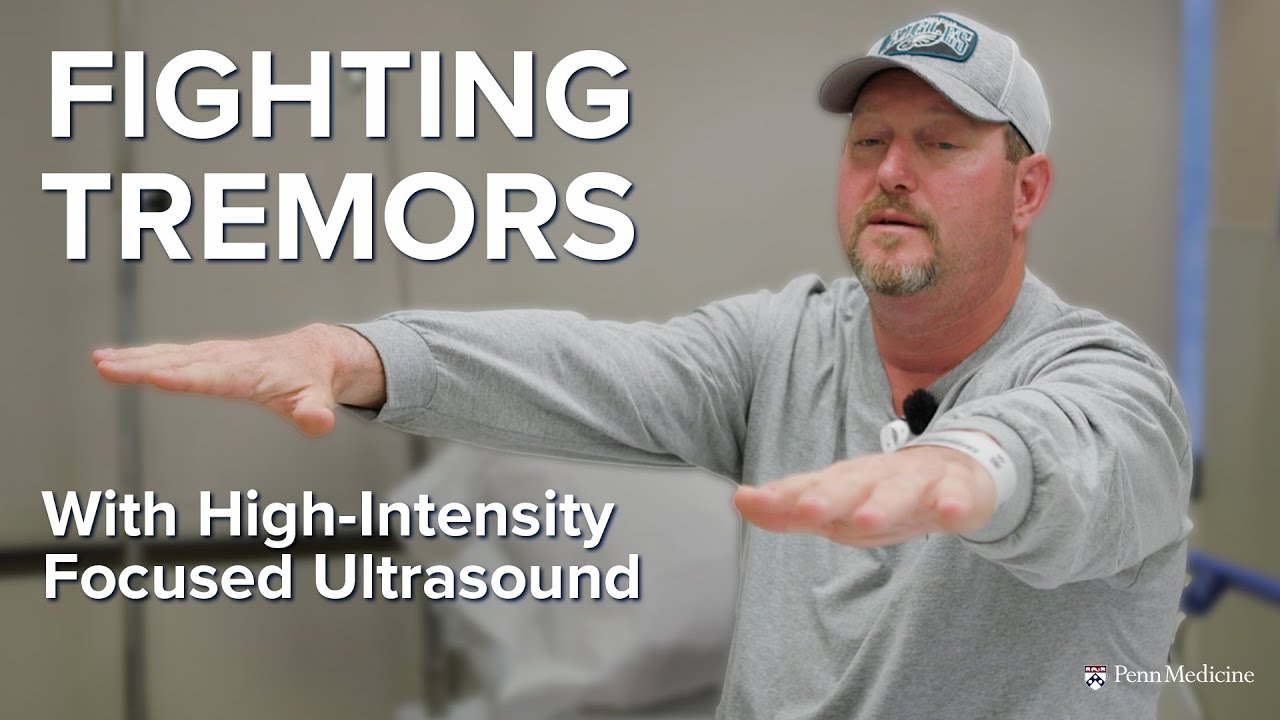
An MRI is used to locate the area of the brain to treat. Then, ultrasound waves are delivered to the targeted area, with additional MRI scans used to monitor progress. At several points during the procedure, you’ll be asked to move your arms and hands so the team can see if the treatment is reducing your tremor.
Recovery after focused ultrasound
You may stay overnight in the hospital after MRgFUS or return home the same day. You will be able to return to work and perform normal activities within a few days.
Some people experience temporary side effects for days or weeks following focused ultrasound treatment. These include:
- Dizziness
- Headache
- Nausea or vomiting
- Numbness or tingling in the lips or fingers
- Problems with coordination and balance while walking
- Problems with speaking or swallowing
Understanding the results of focused ultrasound
Many people who have focused ultrasound for essential tremor notice improvement right away. Because MRgFUS creates a small, targeted lesion in the brain, the effects are often long-lasting or permanent.
Focused ultrasound may be an option if you can’t have, or prefer not to have, traditional surgery. Since there is no incision, recovery is typically faster, and the risk of infection is lower. The precision of this treatment helps protect nearby brain tissue.
In rare cases, treatment doesn’t improve tremors, or tremors return months or years later. Research suggests this may relate to the size of the lesion created during treatment. Larger lesions may lower the chance of symptoms returning, but can slightly increase the risk of side effects. Treatment is carefully planned based on your brain anatomy to balance effectiveness and safety.
Our approach to focused ultrasound
At Penn Medicine, you’ll receive care from a team with deep experience in treating movement disorders and using focused ultrasound. We take time to understand your symptoms and goals, and guide you through every step.
People who choose us for MRgFUS find:
- Patient-centered care: Our Movement Disorders Center offers all leading treatment options for essential tremor. Our team works with each other and with you to understand your unique needs and preferences. We then make comprehensive treatment recommendations designed to control your symptoms and maximize your quality of life.
- Experienced team: Our neurosurgeons have decades of experience with implantable devices and surgeries for movement disorders. Their skill in these precise procedures means you get the best results possible—for fewer symptoms and a better quality of life.
- Pioneering treatments: As leaders in essential tremor and Parkinson’s disease research, our neurologists and neurosurgeons are on the cutting edge of the newest, most effective treatments for movement disorders. We are uniquely positioned to offer more options, including MR-guided focused ultrasound. This groundbreaking treatment is not widely available, but MRgFUS has become a standard treatment at Penn Medicine.
- Care close to home: Penn neurosurgeons see patients at satellite locations across the region allowing convenient consultations, second opinions, and pre- and post-operative care in your community.