
Inherited retinal disease care
Restoring vision for the blind
Retinal gene therapy restores vision in patients with inherited blindness. With a unique gene therapy pioneered by Penn Medicine, we can now replace a missing gene and restore vision.
First gene therapy for inherited retinal disease
Pioneering research at Penn Medicine has led to a first-of-its-kind therapy to treat a genetic disease. This FDA-approved gene therapy reverses blindness in children and adults born with a rare form of inherited retinal disease called Leber congenital amaurosis (LCA). LCA, itself a type of early onset retinitis pigmentosa, affects an estimated one out of every 30,000-81,000 newborns and causes progressive deterioration of the poor vision found in early childhood.
The treatment, developed at the University of Pennsylvania with clinical trials carried out at Children’s Hospital of Philadelphia and the University of Iowa, is the first-time gene therapy is used to treat an inherited disease and could lead to treatments of other currently untreatable conditions.
Pioneers in gene therapy
The FDA approval for the treatment of inherited retinal disease marks the second groundbreaking advance in gene therapy made at Penn Medicine within the year. We made history in August 2017 when the FDA approved a personalized cell therapy for advanced leukemia, the first-ever for cancer cell and gene therapy. This latest development in gene therapy is the result of more than two decades of painstaking genetic research by Jean Bennett, MD, PhD, and Albert M. Maguire, M.D., spouses, ophthalmologists and co-directors of the Center for Advanced Retinal and Ocular Therapeutics at Penn Medicine. They and their colleagues achieved the FDA approval seventeen years after they restored sight to a blind dog named Lancelot, who had a canine version of LCA.
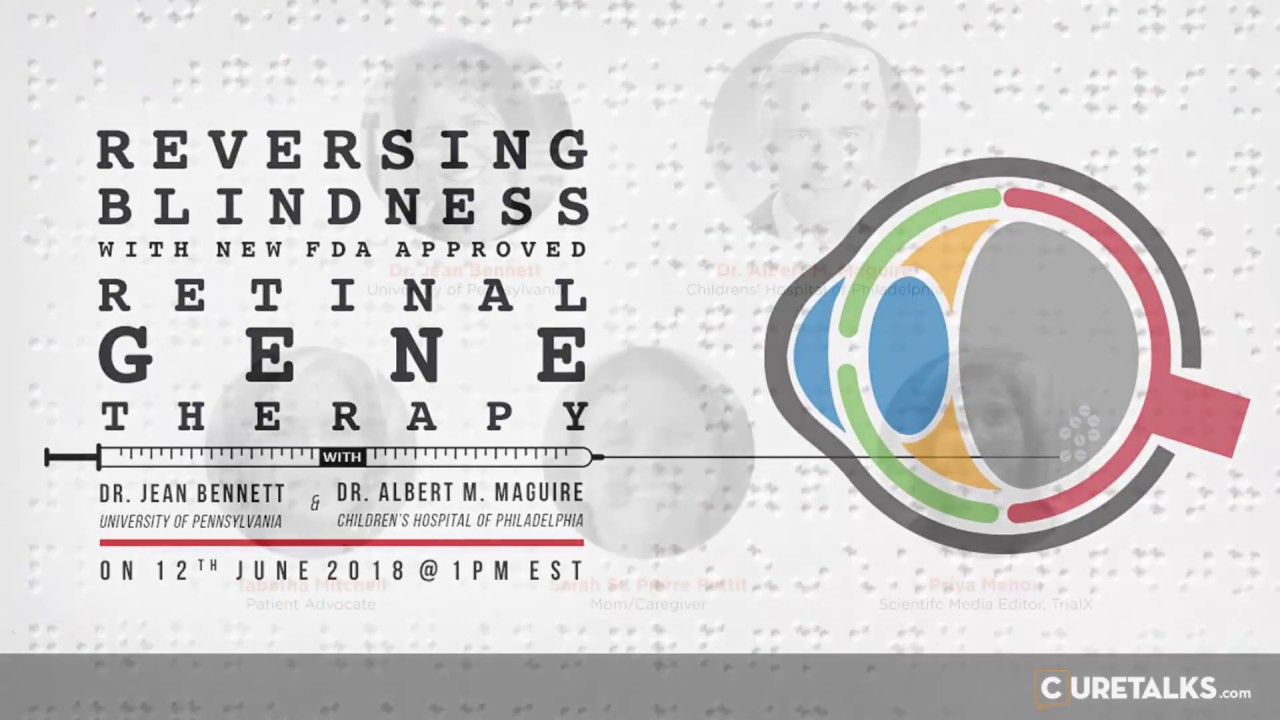
In the following CureTalks audio interview, Dr. Bennet and Dr. Maguire discuss the work that led to this ground-breaking FDA approval and how the treatment can reverse blindness.
Gene therapy for congenital blindness
Genes in every cell provide a blueprint for your body, influencing both physical traits like height and functional ones like sight. A gene mutation can disrupt this blueprint, sending incorrect or no signals to the body. Mutations in 265 genes can lead to blinding diseases, often affecting the retina, which is responsible for capturing light. One crucial gene for vision is RPE65, which supplies a vitamin A derivative essential for retina function. A mutation in RPE65 causes Leber congenital amaurosis (LCA), an inherited eye disease.
How does gene therapy work for Leber congenital amaurosis?
Gene therapy addresses faulty genes by replacing them with healthy ones, adding new genes, or disabling problematic ones. At Penn, gene therapy for LCA involves injecting a normal RPE65 gene into one eye, followed by the second eye after six to 18 days to ensure proper healing.
This one-time treatment typically enhances vision, improving patients’ ability to perform daily tasks and gain greater independence.
Frequently asked questions
Leber congenital amaurosis is an early-onset form of retinitis pigmentosa. It causes abnormal vision in childhood, worsening as retinal cells deteriorate. A mutation in the RPE65 gene is a common cause of this condition. Genetic testing can determine if you or a loved one has this mutation.
While RPE65 mutations are rare, inherited eye diseases cause over 60% of infant blindness cases. Researchers at Penn, including Dr. Bennett’s lab, are developing treatments for other inherited retinal disorders.
Gene therapy involves injecting a normal RPE65 gene behind the retina, where light-sensitive cells are located. This corrects the gene mutation that impairs vision, potentially restoring sight.
The one-time treatment has significantly improved vision for most patients, enhancing their ability to perform daily tasks like playing sports, using a computer, and attending college.
The treatment is available for individuals aged 12 months and older, with no upper age limit.
Approximately 6,000 people worldwide may be eligible, including 1,000 to 2,000 in the U.S. To determine eligibility, you need genetic testing to confirm if RPE65 mutations are causing your blindness.
Our doctors
Our providers work with you to plan and deliver exceptional treatment and personalized care.
Locations
Our hospitals, multispecialty medical centers, pharmacies, labs and more offer outstanding, personalized care for patients all across the region.