Setting the standard in cardiothoracic excellence
Penn Medicine Lancaster General Health offers exceptional cardiothoracic surgical care for complex heart conditions in even the highest-risk patients.
The Cardiothoracic Surgery Department at Penn Medicine Lancaster General Health is recognized regionally and nationally for its track record of excellence in surgical treatment of complex heart conditions.
The department combines the latest technological advances, interdisciplinary expertise, and a patient-centered philosophy to deliver world-class outcomes, even in the most challenging cases.
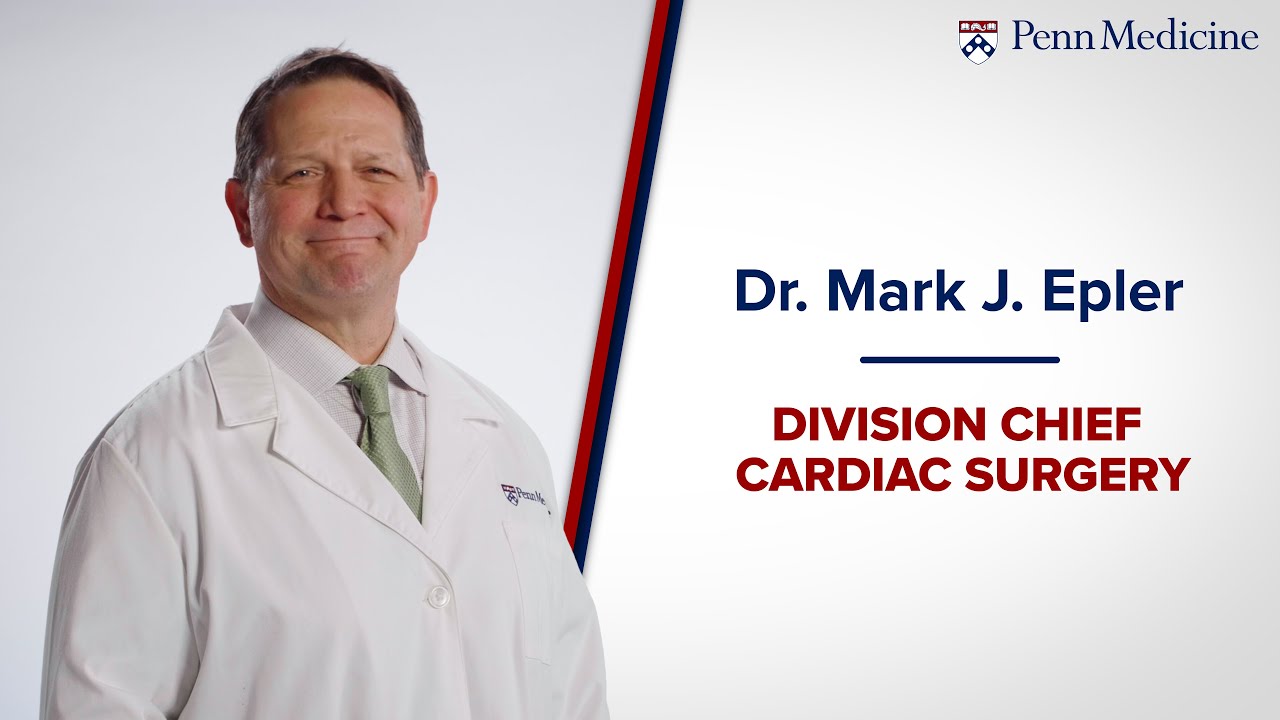
“At no time in our history has the department offered the scope and breadth of cardiac surgical procedures and expertise to patients with a wide range of complex cardiac pathologies as we do now,” says Mark Epler, MD, division chief of thoracic and cardiovascular surgery at Penn Medicine Lancaster General Hospital.
“This is a testament to both the quality of our team and their ability to take advantage of how the field has evolved and the advances available to patients.”
A comprehensive approach to surgical excellence
Lancaster General Health's outward appearance as a community hospital fails to give a true impression of its reputation, specializations, and surgical experience. These attributes have generated exceptional outcomes for patients over an extended time period.
The Society of Thoracic Surgeons (STS) administers a worldwide registry that tracks mortality rates for nine individual and combined procedures according to operative status.
At Lancaster General Health, the 5-year mortality rates for elective procedures between 2020 and 2024 are below 1 percent for eight of the nine procedure categories, with six achieving a 0 percent mortality rate. For urgent procedures, the 5-year mortality rates are under 7 percent for eight of the nine categories, with three also showing a 0 percent mortality rate. Overall, eight out of the nine procedure categories—spanning all operative statuses (elective, urgent, and emergent)—outperformed the STS benchmarks for 30-day operative mortality during this period.
“Our surgeons are board-certified and bring over 50 years of collective experience in a diverse range of advanced skill sets,” says Dr. Epler. “We have the capacity to take care of nearly any complex cardiac event or procedure.”
Expert coronary artery revascularization
The program’s trend of excellence is reflected in a recent 3-star rating from the STS for overall surgical outcomes, placing them in the top 20 percent of worldwide cardiothoracic surgery centers participating in the registry.
Dr. Epler explains that the program’s foundations are in CABG procedures, outcomes from which garnered the 3-star designation for the previous three consecutive years.
“We focus on multi-arterial grafting, which is technically demanding but rewarding for patients in terms of long-term efficacy,” he says. These procedures involve using more than one arterial conduit to bypass a blockage, with evidence supporting results of:
- Improved long-term survival
- Reduced need for future re-operation
- Decreased incidence of repeat cardiac events
Dr. Epler adds that they perform traditional open-heart CABG procedures using mechanical ventilation in approximately 90 percent of cases, because this historically offers the best possible outcomes for patients. “This approach supports our goal of providing patients the most direct route to long-term health and a better quality of life.”
Lifesaving aortic interventions
The team takes pride in the types and volumes of aortic pathologies they treat. This includes not only elective surgeries for thoracic and abdominal aortic aneurysms but also acute aortic syndromes, such as dissection and rupture, for which Lancaster General Health is a regional receiving center.
“We’ve seen significantly increased volumes of patients originating from other hospitals within the region and beyond through the Penn Medicine transfer center,” Dr. Epler explains. Those higher volumes are a testament to Lancaster General Health’s significant experience and exceptional patient outcomes from both elective and emergent surgeries.
Complex heart valve repair and replacement
Status as a multi-valve center highlights their expertise and experience in treating complex heart valve disease and conditions. This includes interventions addressing congenital heart disorders.
Access to advanced imaging and diagnostic approaches, including echocardiography, CT, and MRI, supports the valve procedures offered at Lancaster General Health, including:
- Surgical valve repair or replacement
- Combined surgery to replace multiple valves at once
- Minimally invasive procedures, such as transcatheter edge-to-edge repair (TEER) and transcatheter mitral valve repair (TMVR)
Advanced treatments for heart failure
For patients with end-stage heart failure who are not candidates for heart transplantation, Lancaster General Health offers access to durable, implantable ventricular assist devices (VADs).
In addition to VADs, extracorporeal membrane oxygenation (ECMO) allows mechanical support of a patient’s circulation before, during, and after a procedure and offers a degree of confidence in tackling high-risk cases.
“Our original intent for developing a Mechanical Circulatory Support program was to support high-risk patients on a short-term basis,” explains Dr. Epler. However, the program has evolved to now enable implantation of VADs allowing patients a bridge to transplant, long-term support for those ineligible for a transplant, or the time necessary to recover heart function.
“Through a multidisciplinary approach involving expert heart failure specialists and cardiac surgeons, we have the resources to tackle whatever pathology a patient presents regardless of whether the setting is emergent or elective.”
Committed to caring for high-risk patients
High-risk referrals are a common theme at Lancaster General Health.
In a market crowded with health systems and multiple options, Dr. Epler says that the program’s ultimate distinguishing factors are Lancaster General Health’s willingness to treat the highest-risk patients combined with consistently excellent outcomes.
“Our outcomes are exceptional for elective surgeries,” he explains. However, he adds that the results that should be highlighted are for patients presenting with critical life-threatening cardiac conditions in urgent need of advanced therapies not routinely offered elsewhere. “We have the resources and expertise to recover patients from even the most dire cardiac conditions.”
These are patients who require a high-risk procedure or are experiencing a life-threatening cardiac event. Dr. Epler notes that Penn Medicine Lancaster General Health has made it their mission to focus on these critically ill patients in the event that other centers cannot. “Our case volumes are high, owing to over 20 years of experience with the use of mechanical circulatory assist devices.”
Dr. Epler emphasizes that the expertise derived from high case volumes benefits not only the surgeons but the entire team and translates into better care for all their patients. “We’re ready and able to provide the best surgical care available. For high-risk patients, that care will likely save their lives.”
Advantages of collaborative care
Affiliation with Penn Medicine means collaborations with a world-renowned surgical cohort. This includes opportunities to share lessons learned, improve technical proficiency, and uphold high quality standards.
“Being part of Penn Medicine is an enormous benefit to our local community in terms of the care they’re being offered,” explains Dr. Epler.
Another benefit includes patient access to clinical trials, as well as the latest research and advances in surgical techniques. “Our integration with trials at Penn Medicine is also opening doors for us to initiate research at Lancaster General Health,” says Dr. Epler.
Such opportunities can mean access to new devices and equipment that can have an immediate impact on patient care. “We view this as part of our mission to constantly improve on the durability and success of the procedures we perform.”
Clinical consult and patient referral
To refer a patient for a cardiothoracic surgery consultation at Lancaster General Health, please call 717-544-4995 or submit a referral through our secure online referral form.
For clinical consult, please call 877-937-7366 and press 3 to speak to a Penn physician.
Meet the team