
To grow as a nurse, I keep saying ‘yes'
Sara Cohen, DNP, the practice manager of the Penn Parenting Resource Center at Pennsylvania Hospital, finds that the center is a place of healing—both for the new parents receiving mental health support and newborn resources, but also for herself. She reflects on the 20-year path that led her to this role and how each step has helped her feel at home at Pennsylvania Hospital—the nation’s first—which celebrates its 275th birthday this year.
I gave birth to my first son, Charlie, less than a year after starting as an Intensive Care Nursery (ICN) bedside nurse at Pennsylvania Hospital in 2005. He was delivered six weeks early and had to be admitted to our unit. My second son, Aaron, was also born early and an ICN patient in 2009. Both were high-risk pregnancies.
When Charlie was in the ICN, I remember being in the hospital hallway, crying, and thinking that I did something wrong. But the doctors reassured me: ‘Sara, you know this isn’t your fault.’ A lot of the families I took care of had babies born this early, and even earlier. But I was in this pure mom mode. It gave me a great appreciation for what parents of babies in the ICN go through.
A parent of one of the babies I cared for in the ICN several years ago found a callout from a writer who was looking for essays to include in an anthology of stories about premature births and thought my story, as both a mom and a nurse, would be a good fit.
After the book was published, I received a Penn Medicine CAREs grant to purchase 25 copies to distribute to parents in the ICN. I wrote a message inside each of the covers to, first, congratulate them—many people don’t know what to say in this situation and forget to congratulate them on giving birth and having their baby—and second, to stay strong and that I’d be happy to find more resources for them if needed.
A few parents reached out to say thank you. It was a small way to tell them they were not alone.
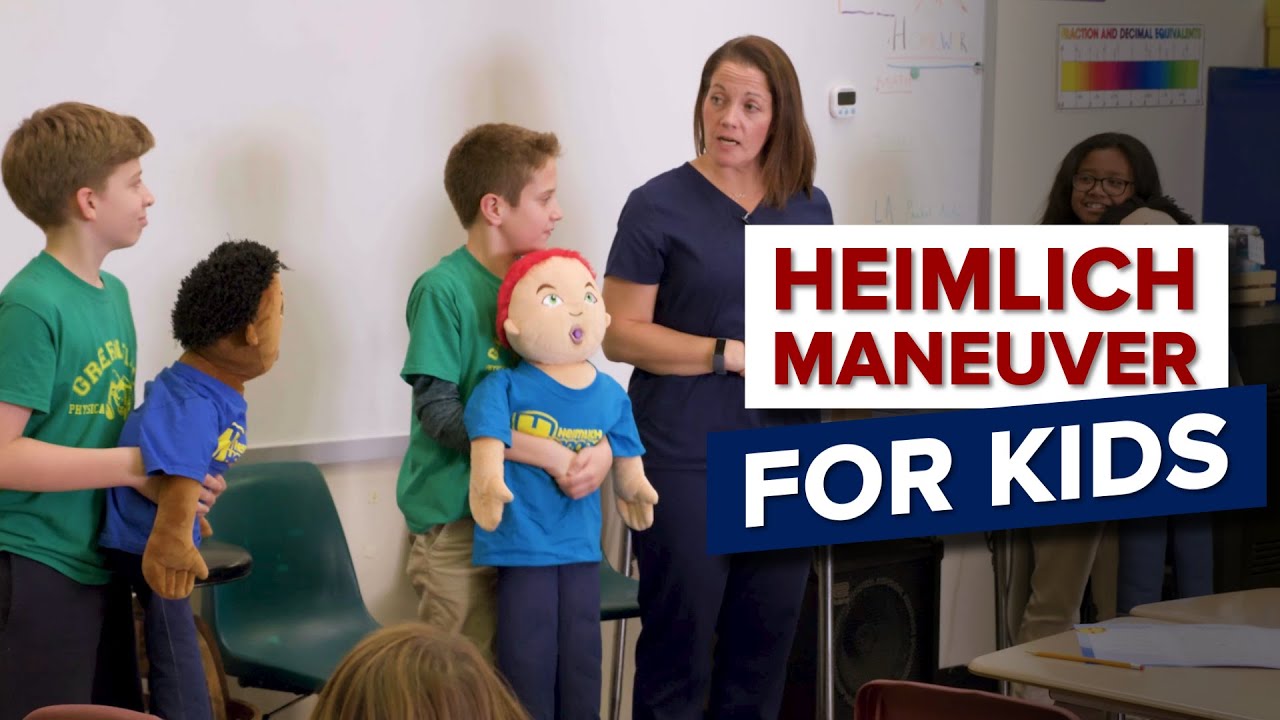
Cohen used a Penn Medicine CAREs grant in 2019 to offer life-saving Heimlich maneuver training to students in the School District of Philadelphia.
Becoming ‘that person’ to help others
In 2013, I went back to school through Penn Medicine’s tuition reimbursement program for my master’s in nursing education at Drexel University. I had always enjoyed being a preceptor for other nurses, and it felt like a waste to not take advantage of this benefit from Penn. The first semester opened my eyes to all the ways nursing can go beyond the bedside. You can affect patient outcomes on a broader scale without directly providing care.
After earning my degree, I applied for a new position Pennsylvania Hospital was introducing and became its first nighttime clinical nurse education specialist in 2017.
I covered the entire hospital, responding to any codes to support nurses and families, just helping out wherever I could. This included onboarding and checking in with new nurses for their orientations. The role evolved to also lead programs that were originally only available during the day—like CPR renewal classes, simulations to review clinical protocols, and lecture series.
My team and I wrote an article about the success of the role—how it recognized challenges for the night shift and bolstered support among staff—and presented it at the Association for Nursing Professional Development conference. Now other Penn Medicine hospitals have this position.
It was great to help teams like this throughout the hospital, but it also exposed me to the increasing mental health challenges among patients. People were coming in to be treated for serious medical issues, but they were struggling with mental health on top of it.
It can be difficult to get that help, trying to navigate insurance and access to providers. I could relate—I was already seeing a therapist who helped me with my trauma from my pregnancies and deliveries. When my son needed a therapist, it became like a second full-time job to find him one quickly. It felt like this was a new direction for me—I wanted to be that person who could help others through these challenges.
Again, through Penn Medicine’s tuition reimbursement program, in 2019, I pursued a dual degree to become a Doctor of Nursing and a psychiatric mental health nurse practitioner through Maryville University in St. Louis. Fortunately, classes were virtual and I could do clinicals locally through Hall Mercer, Pennsylvania Hospital’s inpatient psychiatric unit, and Children’s Hospital of Philadelphia (CHOP).
A new, great opportunity
I was balancing classes and work, when one of the women’s health leaders approached me about plans to restructure the outpatient aspect of the Women’s Health department and encouraged me to apply for a new manager position. The department was reimagining what had been a shop that sold items for pregnancy and postpartum, into a new hub for parenting resources.
I went home and told my husband that there was no way I could take on a new role right now. He reminded me that I’ve said yes to a lot of great opportunities at Penn, and this would be one of them. So I applied, interviewed, and became the practice manager of what is now known as the Penn Parenting Resource Center.
As practice manager, I oversee the Center’s programs and a team of excellent instructors. Classes have evolved based on patients’ needs, ranging from prenatal and perinatal education, like what to expect in the first few days after delivery, to lactation support for parents who choose to breastfeed.
I lead both group and individual sessions to explore parenthood for babies under six months and help parents with perinatal mood disorders, like anxiety and depression. I graduated from Maryville University in 2024 and became certified in perinatal mental health, which allowed me to provide one-on-one therapy and prescribe medication.
We have many repeat patients who come back to navigate a second pregnancy. Nothing says it’s helpful more than that. It’s also reflected in our data: Since 2019, the Center has seen a 40 percent increase in the number of lactation visits each year, along with an increase in patient visits per month from 50 to nearly 200.
As I’ve helped people, I’ve felt less alone in my own birth and delivery experiences. I’ve carried all this trauma that happened 20 years ago, and I feel more at peace now.
Penn has been an incredible part of my … well, I don’t actually like the word ‘journey,’ I think it is overused, but I think that word best describes my time with Penn.
I’m very grateful, especially to Pennsy (our friendly nickname for Pennsylvania Hospital). I love it here. I don’t see myself anywhere else. They gave me opportunities to grow and follow my passion, and I’ll continue to say yes to more great opportunities.
Penn Medicine employees: Do you have a career story you’d like to share? Email EmployeeStories@pennmedicine.upenn.edu.