
Labor and delivery at Doylestown Health
Exceptional, family-centered care for your birth experience
At Doylestown Health’s VIA Maternity Center, we provide compassionate labor and delivery care for expecting families in a comfortable and welcoming setting. We deliver around 1000 babies each year and take pride in providing excellent maternity care close to home. Whether your pregnancy and birth are routine or more complex, you and your baby will be nurtured by an experienced team that brings compassion to the bedside and finds joy in developing relationships with families.
What to expect during your stay
The VIA Maternity Center features a welcoming 32-bed maternity unit with nine labor, delivery, and recovery rooms and 22 private postpartum rooms. When you’re with us, you’ll benefit from:
- Private rooms: All labor, delivery, and postpartum rooms are private and designed for comfort.
- Supportive environment: Water therapy is available for pain management and relaxation during labor.
- Advanced monitoring: We offer the latest fetal monitoring technology, including wireless options that allow for movement and comfort.
- 24/7 anesthesia care: Skilled anesthesiologists and Certified Registered Nurse Anesthetists (CRNAs) are available around the clock.
- Mother-baby couplet care: You and your baby are cared for by the same nurse to promote bonding and continuity of care.
- Lactation support: International Board-Certified Lactation Consultants (IBCLCs) are available every day to support breastfeeding.
Take a virtual tour
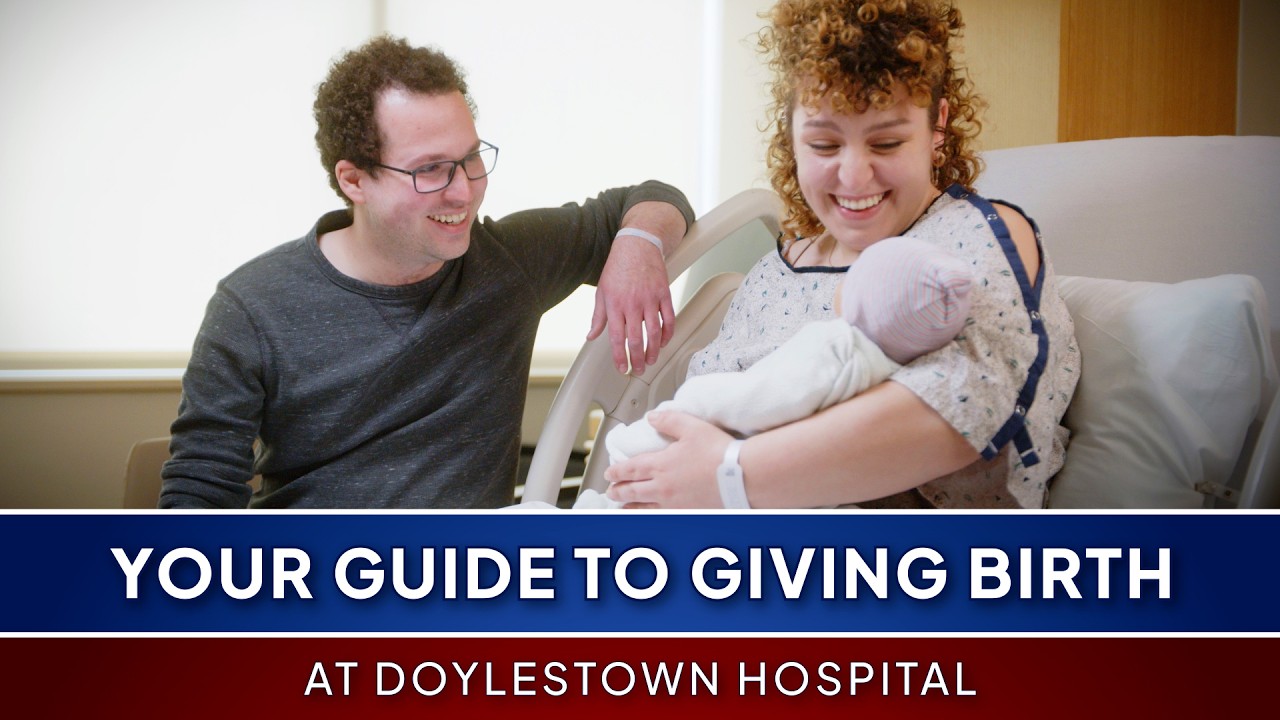
Mother and baby care at Doylestown Health
From the moment you step into the VIA Maternity Center, our supportive mother-baby nursing staff will provide you with personalized care, with the same nurse assigned to both you and your baby. Our philosophy is to care for mothers and babies together and provide care at the bedside whenever possible.
The first hour after birth, sometimes called the golden hour, is an important time for the transition of the baby to life outside the womb. We recommend staying skin-to-skin for at least one hour or until after the first feeding. Some babies will actually crawl to find the breast and latch on their own. Skin-to-skin benefits all mothers and babies whether you are planning to breastfeed or not.
Skin-to-skin contact is not just for the hour after birth. When establishing breastfeeding in the early days, it is the first step to help babies learn to nurse. Partners can bond skin-to-skin with their babies as well.
Mothers and babies belong together as much as possible, and our family-centered care model helps you learn to care for your baby. Research shows that rooming in helps you connect with your baby, facilitates skin-to-skin contact, and provides opportunities to learn normal newborn behavior and feeding cues.
At our VIA Maternity Center, new parents are taught safe sleep practices that you will be encouraged to continue at home. By participating in your baby’s care from diapering to soothing, you build confidence as you get ready to go home with your newborn.
Before you move to your postpartum room, a nurse will complete a full newborn assessment. This includes measuring your baby’s weight and length and giving routine newborn medications.
Your baby will be securely identified with matching ID bracelets, and you’ll receive a keepsake copy of your baby’s footprints. Rooming in is encouraged so you can spend time together, but the well-baby nursery is available when a procedure is needed or based on your family’s needs.
Before you go home, you’ll need to choose a pediatric care provider. Your care team will review follow-up plans and help ensure a smooth transition to care at home.
From birth through discharge, your baby is cared for by pediatricians and neonatologists affiliated with Children’s Hospital of Philadelphia (CHOP). CHOP specialists are available around the clock to provide routine newborn care, answer parent questions, attend deliveries when needed, and support babies who require additional medical attention.
Level II Intensive Care Nursery (ICN)
If your baby needs extra care due to premature birth or a medical condition, our Level II Intensive Care Nursery (ICN) provides specialized support in a calm, family-focused setting.
The ICN is staffed 24/7 by neonatologists from Children’s Hospital of Philadelphia (CHOP) and specially trained neonatal nurses. Our team has extensive experience caring for premature and medically fragile newborns. A low nurse-to-patient ratio allows for close monitoring and individualized care. Through CHOP, your baby also has access to a full network of pediatric specialists if needed.
We encourage parents to be active partners in their baby’s care. Skin-to-skin contact is supported as soon as it is safe, and families receive ongoing education to prepare for bringing their baby home.
Lactation support is available daily, and our nurses are experienced in helping breastfeeding parents. When needed, pasteurized donor human milk is also available.
AngelEye camera system
When parents can’t be at their baby’s bedside in the Intensive Care Nursery (ICN), the AngelEye® Camera System helps families stay connected. This secure, HIPAA-compliant video system provides a live view of your baby through a private account accessible on a smartphone, tablet, or computer.
AngelEye supports bonding and peace of mind, especially for families whose babies need longer hospital stays. The system also allows ICN staff to share updates and, when appropriate, participate in virtual rounding to support communication and continuity of care. Access details are provided by the ICN team, and parents can choose to share viewing access with loved ones. This service is made possible through generous support from the Doylestown Health Foundation.
Childbirth and parenting classes at Doylestown Health
Certified educators offer childbirth and parenting classes covering labor, pain management, possible interventions, newborn care, and mental preparation. Practice positions and relaxation techniques in person or through convenient virtual classes.